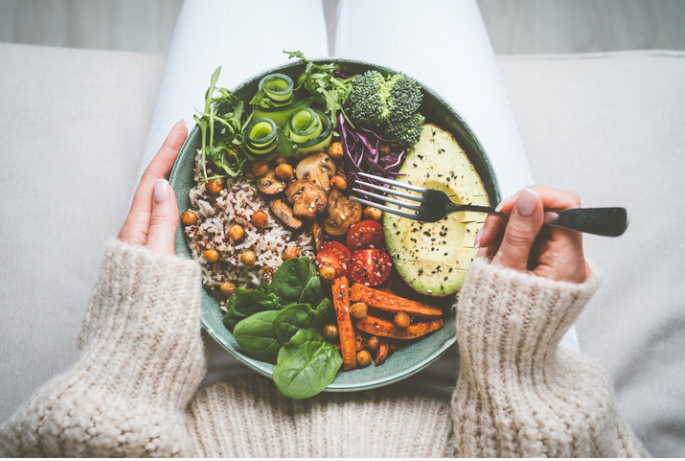
Healthy eating means including a variety of foods that meet nutritional needs. Preventing illness starts with nutrient-rich meals and drinks.
1. Start Slow
Trista Best, LD, a registered dietitian at Balance One, advises that you start slowly. One or two small changes to your diet at a time is a surefire way to avoid overwhelming you.1
“One approach is to try a new vegetable each week,” Best told Health. “Pick a vegetable you’ve never tried before and research a new recipe to integrate into a meal. If you do this each week, or even just once a month, you’ll end the year with several new healthy foods and recipes.”
2. Log Your Intake
One way to be more mindful about your food choices is to put your pen to paper.
“Write down your reasons for wanting to eat healthily—lose weight, lower cholesterol, increase energy, improve moods—and read your list every day,” Lisa DeFazio, RD, a registered dietitian based in California, told Health.
“Track your intake with an app like MyFitnessPal to make sure you are getting all the nutrition you need,” she added.
Talk to a healthcare provider or get a referral to a dietitian to determine your ideal intake.
You can also get a primer from the U.S. Department of Agriculture (USDA)’s MyPlate plan. This personalized food plan, based on age, sex, height, weight, and physical activity level, shows what and how much to eat.2
3. Eat Fewer Ultra-Processed Foods
Ultra-processed foods can reduce the nutritional quality of diets and increase the risk of obesity.3 Examples include store-bought cookies and sugary breakfast cereals.
Multiple portions in one package or harmful ingredients make it hard to control your food intake. “Ultra-processed foods are highly processed and designed in such a way that they’re very easy to overeat,” Summer Yule, RD, a registered dietitian, told Health.
Make it your default to consume whole foods and meals that you prepare yourself.4
Ultra-processed foods do not include items like chopped and frozen vegetables, canned beans, or shelled pistachios. These foods have been minimally processed, but are still whole foods.
It’s also okay to enjoy processed snacks in moderation every now and then.
4. Eat More Plants
Vegetarians have higher levels of healthy fats, antioxidants, and anti-inflammatory compounds in their bodies than non-vegetarians.5 This is likely because vegetarians consume more plant-based foods.
You do not have to go vegan or vegetarian to reap the benefits of going more plant-based. The flexitarian diet is primarily vegetarian but includes occasional animal protein.6
5. Balance Your Plate
Try to think in terms of what’s on your plate. It’s important to eat a variety of foods, but certain ones should be included at every meal.7
Fruits and vegetables should make up half your plate.8
DeFazio also recommends having lean protein on your plate. Aim for at least 1 ounce of nut butter, turkey bacon, cottage cheese, or an egg at breakfast. For lunch and dinner, protein should be about a quarter of your plate.9
For reference, 3 ounces is about the size of a deck of cards.
6. Make Sensible Swaps
Foods high in added sugar or sodium should be consumed in moderation.1011 It’s also important to eat white flour in moderation. White flour is found in many baked goods and bread.
Swap out a significant amount of these foods for whole grains or vegetables. You can use cauliflower rice instead of white rice or legume pasta instead of white flour pasta.
You can also swap out mayonnaise for mustard and use spiralized vegetable noodles for your pasta. Also consider switching sodas for sparkling water.1
7. Try Volume Eating
“Volume eating is a fascinating concept to eating a balanced, nutrient-dense, low-calorie diet pattern without sacrificing hunger,” said Best. “Essentially, the consumer eats large volumes of food that are low in calorie density.”12
This means choosing low-calorie foods, like vegetables, and eating them in large quantities.
8. Don’t Ignore Carbohydrates and Fats
The belief that carbohydrates and fats are “bad” for you is incorrect.
Carbohydrates are your body’s main source of energy, so it’s important to eat plenty of them. Just opt for complex carbs like whole grains from brown rice, oatmeal, and whole-wheat pasta, instead of simple carbs.13
Make sure you also have a serving of healthy fats like nut butter, avocado, or olive oil at each meal.
Healthy fats can decrease your risk of heart disease, hardening of the arteries, and stroke. They also lower your blood pressure, triglycerides, and low-density lipoprotein (LDL) cholesterol.1415
9. Boost Your Water Intake
You also want to make sure you are drinking healthier. Drinking enough water helps you regulate your temperature, process waste, and protect your spine and joints.16
Try to avoid or limit beverages with added sugar. They can increase the risk of diabetes, weight gain, and gout.17
10. Set Yourself Up for Success
One reason it can be hard to start eating healthy is that it takes time and energy. That’s why convenient foods are so tempting, especially when you are swamped or low on energy.
Keep fruits, lean proteins, legumes, nuts, seeds, and vegetables stocked in your kitchen whenever possible.
Try going the sheet-pan meal-prep route: Prepare lean protein and vegetables beforehand and store them in the fridge, then throw them on a sheet pan and into the oven.
These options are a convenient way to have a healthy, delicious dinner any night of the week.
Original Source: https://www.health.com/nutrition/how-to-start-eating-healthy